Deep Technical Dive
Airline Market Demand Analysis Web App
A data-driven Flask web app that fetches live flight schedules and generates AI-powered market demand insights for travel and hospitality decision-making.
PythonFlaskPandasAviationStack APIGoogle Gemini APIChart.jsTailwind CSSJavaScript
Problem
Travel and hospitality businesses need fast, route-level airline demand understanding for pricing, promotions, and capacity planning, but raw flight data is fragmented and difficult to interpret manually.
Project Context
- • Developed as a Python Developer Intern technical task focused on practical business intelligence from live airline data.
- • Target users include hospitality and travel teams who need route-level demand awareness without manual data wrangling.
Why It Was Hard
- • Flight data APIs vary in reliability and schema stability, making source selection critical.
- • Raw schedules alone do not directly express market demand, so aggregation and summarization logic is required.
- • AI insights must be constrained to structured outputs to keep backend parsing dependable.
Solution
Built an automated pipeline where users select departure/arrival routes, the backend fetches live AviationStack schedules, processes them with Pandas, and sends structured summaries to Gemini for machine-readable market insights shown in an interactive dashboard.
System Architecture
Diagram space is ready — replace with visuals later if needed.
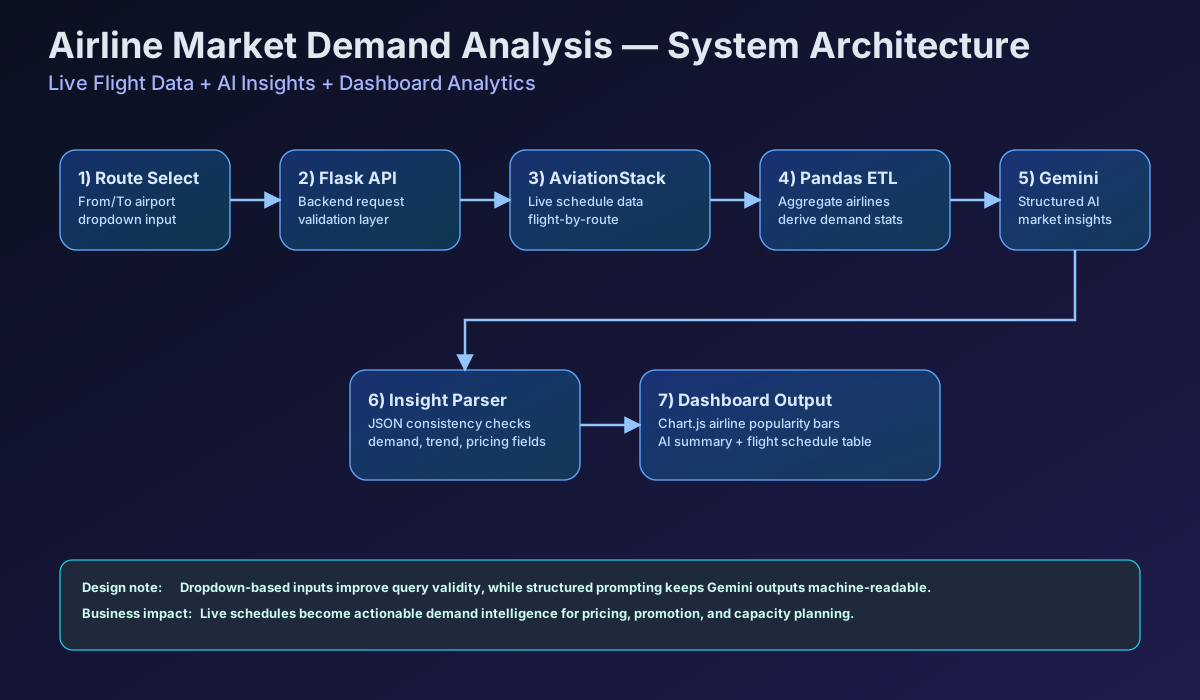
- • User route selection (dropdown-based)
- • Flask backend request handling
- • AviationStack live flight schedule API
- • Data aggregation and preprocessing with Pandas
- • Gemini AI analysis using structured prompt
- • AI-generated market insights in JSON format
- • Dashboard visualization with charts + flight table
Implementation
- • Integrated AviationStack API to retrieve live schedule data by selected airport route.
- • Designed dropdown-based route filters to avoid invalid queries and improve API success rate.
- • Built Pandas processing pipeline to aggregate flights, airline distribution, and route activity patterns.
- • Implemented structured Gemini prompting to enforce consistent machine-readable JSON insight responses.
- • Rendered market visuals with Chart.js and added raw schedule table for traceability of AI conclusions.
- • Used python-dotenv for secure API-key configuration and requests/tabulate for API communication + prompt shaping.
Results
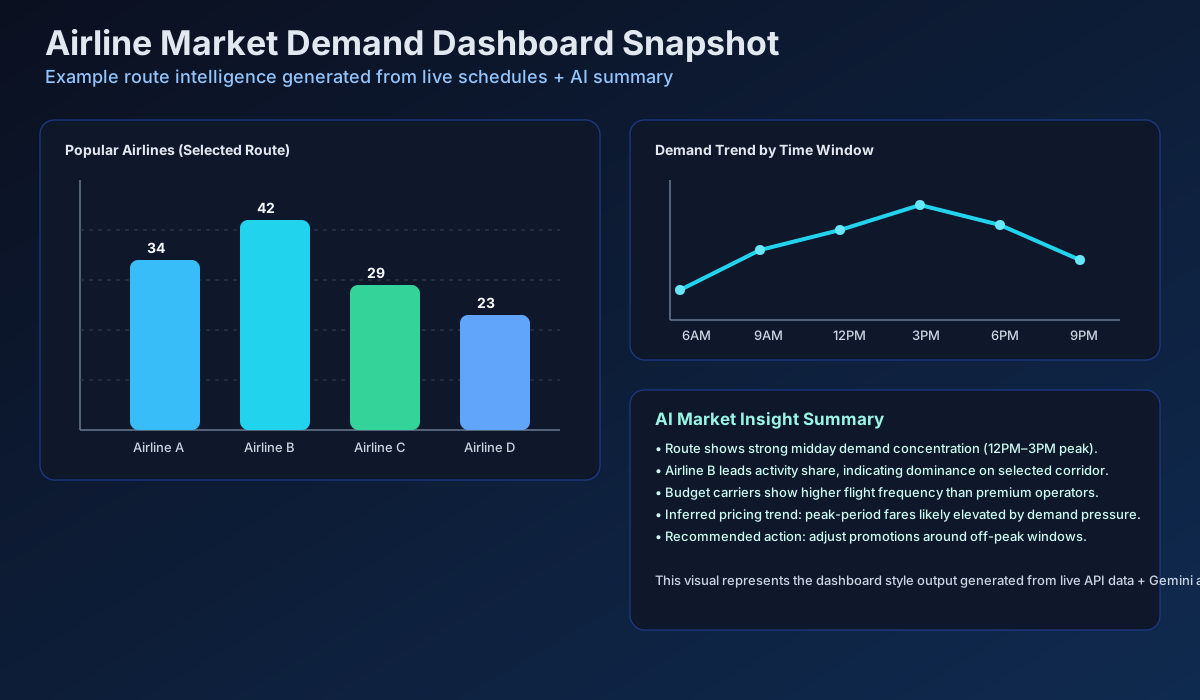
- • Users can fetch real-time route-specific flight activity and airline distribution instantly.
- • Dashboard highlights route popularity, high-demand periods, and airline dominance patterns.
- • AI-generated summaries provide inferred pricing behavior between budget and premium carriers.
- • Combined chart + table + AI narrative improves business readability compared to raw schedule feeds.
Lessons Learned
- • Reliable external data providers are the foundation of real-time analytics products.
- • Prompt structure strongly impacts AI output consistency and downstream parser reliability.
- • Combining deterministic visualization with AI interpretation creates stronger decision support.
- • Simple UX patterns (single-page + dropdown selection) dramatically improve non-technical usability.
Future Improvements
- • Add historical trend storage to compare week-over-week and month-over-month demand shifts.
- • Expand route coverage with multi-city analysis and time-window drill-down filters.
- • Introduce alerting for sudden demand spikes and route anomalies.
- • Deploy role-based dashboards for hospitality pricing, marketing, and operations teams.